

Seatpost slippage
Various methods for keeping your seatpost up

Dear Lennard,
My seatpost keeps slipping down no matter how tight I make the bolt. The wrench hole in the bolt head is rounding out so I’m afraid the allen wrench won’t turn it anymore.
Do you have any suggestions for stopping it from slipping down? Do I need to get a new seatpost?
Torin
Dear Torin,
This question is right up my alley, since we at Zinn Cycles have built lots of Zinn-brand custom bikes for big and tall people for over four decades and for the last decade have done even more of that with our Clydesdale brand bikes. It’s not easy to prevent seatpost slippage on a bike with a rider sitting on it who weighs over 400 pounds! We deploy various measures to keep the seatpost from slipping when we sell a bike to a heavy person.
It's good that your seatpost apparently slips down quickly enough that you notice the height reduction. Sometimes it can creep down so slowly that you don’t notice until it has changed a lot, like not noticing the increasing height of your kids until suddenly they are as tall as you are or the gradual deterioration of your vision until you can’t read a restaurant menu without reading glasses. You may not even notice the height reduction at all until somebody else says, “Wow, your saddle is really low!”
There are ways that you can try to stop it from sliding down in the middle of a ride. And there are better, permanent fixes that you can do at home with more time, tools, and materials. Since you didn’t say that you have a wedge-type seatpost binder system and/or a non-cylindrical seatpost, I will address my response to standard round-cross-section seatposts, seat tubes, and seatpost clamps. Some of the principles apply to non-standard seatposts and clamps, too.
Causes of seatpost slippage
The most likely causes of seatpost slippage are high rider weight and an insufficiently tightened seatpost clamp. Riding surface is also important; bumpy roads and trails can inspire a seatpost to slip down.
The tolerance of the inside diameter of the frame’s seat tube and the outside diameter of the seatpost are critical. So is the seatpost material: chromed steel seatposts are harder, smoother, and more likely to slip than anodized aluminum ones, and the outer layer of many carbon seatposts can squish in and allow slippage.
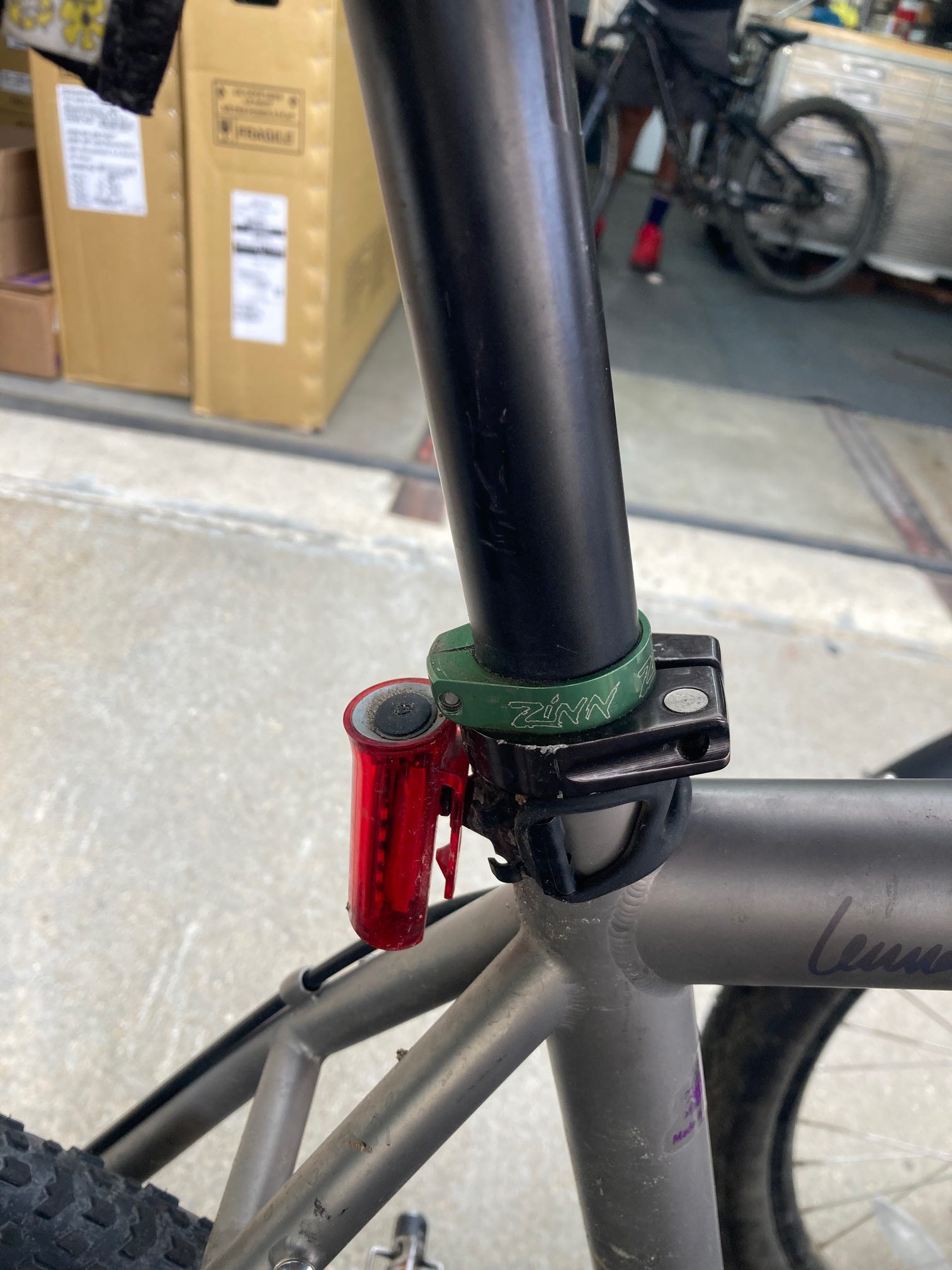
The key to it all is the seatpost clamp. You may have noticed that the bolts in seatpost clamps and even the clamp bands themselves have become wimpier than they were a decade or two ago. While an M6 binder bolt that takes a 5mm hex key used to be standard to adjust saddle height, now seatpost clamps almost always come with a skinnier, M5 binder bolt that takes a 4mm hex key. And those little bolt heads can round out from tightening them, especially on titanium bolts and/or bolts with tapered heads.
I believe that the shrinkage in binder bolt size is due to the advent of dropper posts and superlight carbon fiber seatposts. Overtightening the clamp around a dropper post can bind the post from snapping back up when you push the button and stand up after having dropped it down. Carbon seatposts can get dangerously point loaded when clamped too tightly, and if the post breaks, the consumer tends to blame the seatpost manufacturer and the bike company.
The response by bike companies to issues with both seatpost types is to use a tiny bolt and a thin clamp band that can’t be tightened very tightly. They often also etch a low torque setting number into the clamp.
Especially with a carbon seatpost,
