

Myth Busting!
Dispelling Inner Tube and Chain Myths

Dear Lennard,
Thank you for writing your Substack column, it is very useful! I read in comments in videos about changing a flat bike tire that a lot of cyclists mention that they carry a spare tire tube in a plastic bag that has baby powder or talcum powder in it. Is the use of talcum powder/baby powder during tube installation a myth, or is there an advantage? What are the drawbacks? Does it shorten the life of the tube?
Fred
Dear Fred,
This is the first myth I am going to dispel today, a widespread one that I once adhered to. I used to coat inner tubes religiously in talcum powder and have not so in decades to no ill effect. I stopped because of health issues associated with talcum powder, although I still believed in the myth. Now I believe that it was always a waste of my time.
Regarding the health issues, talc is mined, and talc and asbestos often occur together in the ground. There is apparently no way to separate them economically, and you can’t detect whether there is asbestos present in your talcum powder. Studies of talcum powder have shown concentrations of asbestos in it of up to 30%! And the two of the most dangerous types of asbestos, namely tremolite asbestos and anthophyllite asbestos, are the ones found in talc deposits. Chances are, when you inhale talcum powder, you are also inhaling asbestos.
Asbestos is nothing to mess around with. Prolonged asbestos exposure can lead to mesothelioma and other cancers (lung and ovarian).
In 2020, Johnson & Johnson ceased selling baby powder containing talc in the US and Canada (worldwide in 2023). In 2025, courts blocked Johnson & Johnson’s third attempt to declare bankruptcy and its $10 billion proposed settlement of 60,000 ovarian cancer lawsuits (it wouldn’t have covered mesothelioma suits, 95% of which it claims to have settled separately). Scroll down in this link to see talc mesothelioma lawsuit verdicts against other cosmetics companies.
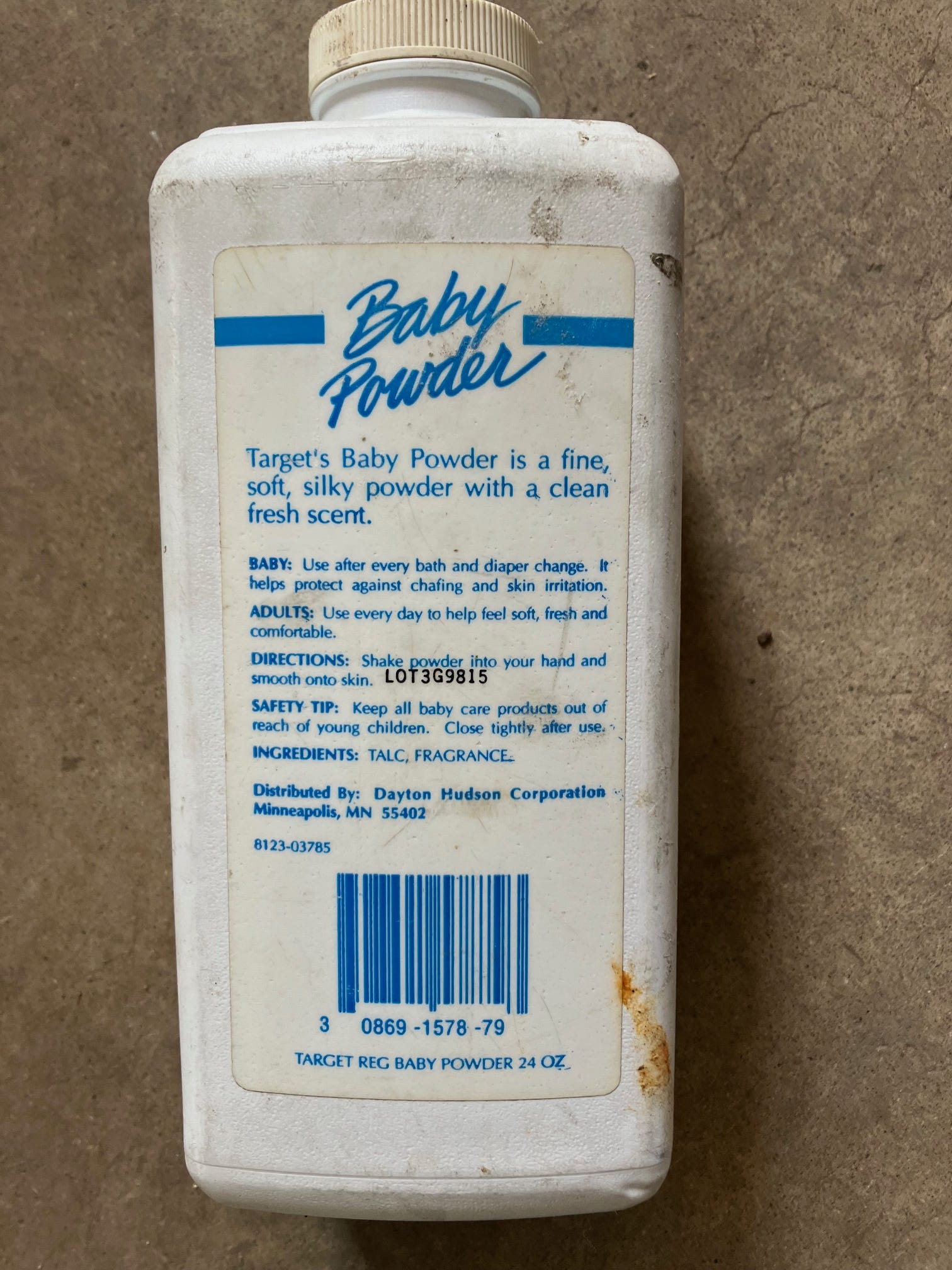
In addition to coating inner tubes with it, I used to also use talcum powder for removing kick wax from cross country skis. It bound up the sticky wax and made it easy to scrape off, with re-application after each scraping pass. I had long since stopped using talcum powder on inner tubes for health reasons but for some reason still used it on skis. Finally the stupidity of that sunk in to me, and I realized that a lot of other powders could accomplish the same thing. Now I instead use flour for kick-wax removal, and I’m sure lots of other powders found in the kitchen would work as well for that.
While flour may work for sticky ski wax, I would never coat an inner tube with flour. I imagine that it would turn to glue inside your tire on a rainy day. I have heard of people instead using cornstarch, or cornstarch-based baby powder for inner tubes, which I imagine water would also dissolve.
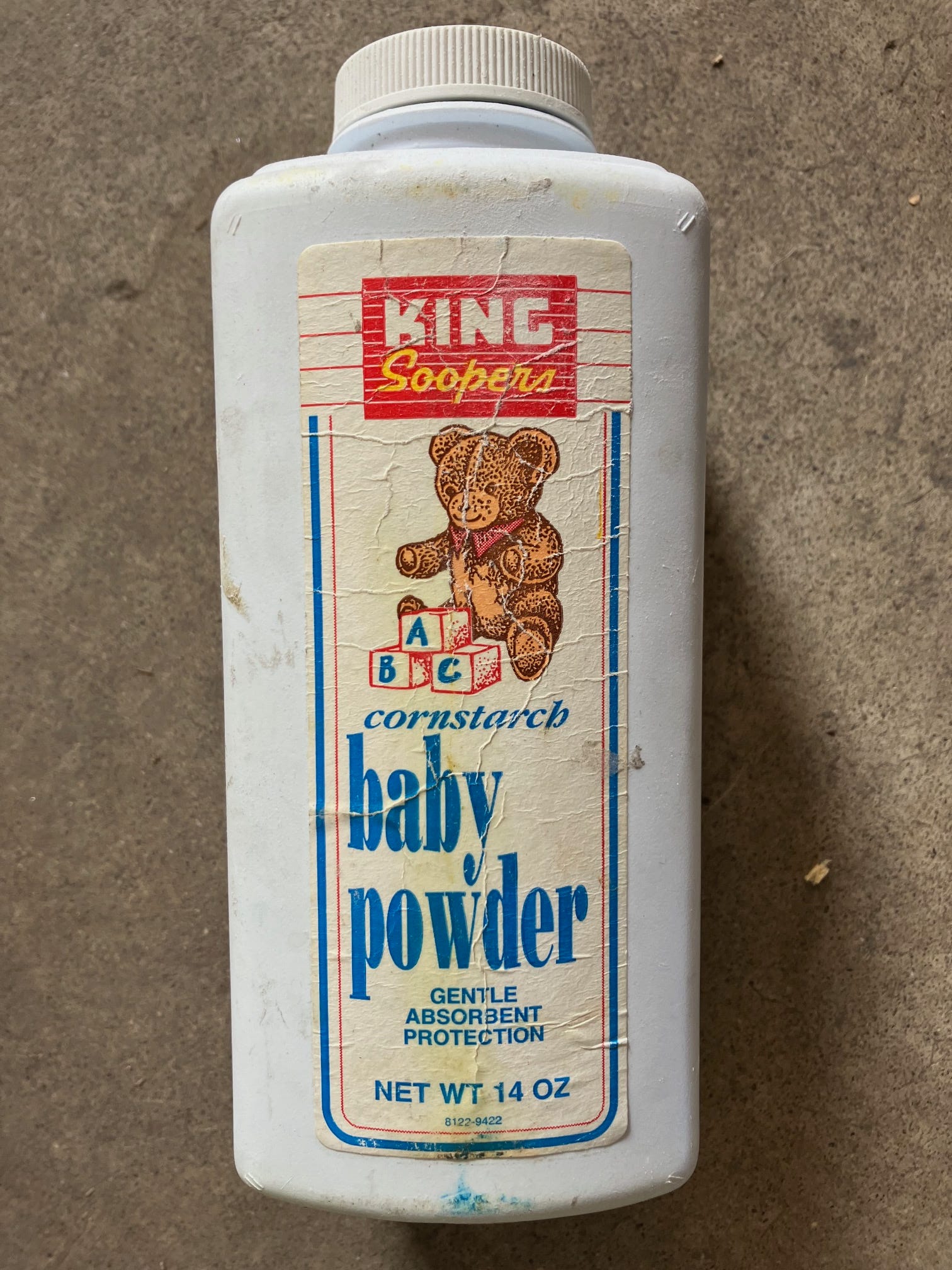
Regarding myth-busting: In my own experience, not coating my inner tubes with talc or any other powder has resulted in no ill effects. Yes, my inner tubes are often firmly adhered to the inside of my tires when I remove them. However, I no longer see this as a disadvantage, and, in answer to your question, it haven’t seen it damage the tube. (That’s not the case with an un-powdered truck inner tube, which can melt to the tire and get torn up on removal; see final paragraph.)
A reason often cited for using baby powder on inner tubes is to reduce rolling resistance, ostensibly by allowing the tube to move around inside the tire. This makes no sense.
I have studied tire rolling resistance and other frictional forces opposing cyclists for many years. A sure-fire way to create speed-robbing friction is movement between two parts that don’t need to move relative to each other. Indeed, Bicycle Rolling Resistance tested using talcum powder on both butyl and latex inner tubes. Its results showed no reduction in rolling friction, but rather an increase, albeit a tiny one within the margin of error.
I’ve also seen claims of reduction in pinch flats because the tube can move inside the tire, which also makes no sense. If the tube gets pinched down against the rim as the tire folds upon a hard impact, the air pressure will keep it against the tire whether it’s lubricated with powder or not. And a pinched tube stuck to the tire will lose air more slowly than one that’s free to move.
Another advantage cited is less abrasion of the tube. How does that make sense? If it is stuck to the tire and can’t move, there will be no abrasion. Rather, having it able to move relative to the tire could cause that!
As for another claim of it making it easier to install the tube without damage, I don’t buy that, either. You still have to physically push the tube in and make sure none is caught under the bead upon inflation. If anything, it could be argued that more lubrication will make it easier for a bit of the tube to slide out under the bead.
And regarding improved puncture resistance claimed as a reason to powder a tube, that’s also hogwash. Punctures would be less of an issue if the tube is stuck to the tire casing, not vice versa! If air can get out through a hole in an inner tube and then not only escape through the hole in the tire but also bleed out through the sidewalls because it can flow around in the space between tire and tube, the tube will deflate faster than if it’s stuck to the tire. Also, consider a thorn puncture in a tubeless tire versus in an inner tube with sealant inside. Sealant goes to where air is escaping and plugs it, which in a tubeless tire is around the thorn. In a tubed tire with a thorn in it, if the tube can move inside the tire, its movement against the thorn can keep pushing sealant out of the way and allowing air to escape. The inner tube stuck to the inside of the tire is a benefit, not a detriment. Indeed, this is how Challenge tubeless tubulars are made; the sticky “green” latex inner tube permanently adheres to the inside of the tire.
Truck inner tubes are generally coated in talcum or graphite powder to prevent them from vulcanizing to the tire casing and may be where this myth originated. A bike tire rolling along with a human aboard cannot possibly generate enough heat to vulcanize the tire and tube together. That said, inner tubes do have powder inside, and that’s because the heat of manufacture (they are extruded while molten) could cause their walls to stick together so that air could not get inside.
― Lennard
Dear Lennard,
Your post today had me wondering about the Silca video on the sous vide method called “How to Try Chain Waxing Without a Full Setup”. Fair enough. I can boil a pot of water. But she says to measure the temperature of the water before putting the chain in and then of the wax to determine when to take it out. Is it necessary to have special thermometer to do this? She says the thermometer is optional, but then she says that any 10-degree deviation from 75 degrees Celsius makes a “significant difference in the longevity of your waxed chain”.
Trying to keep it simple,
James
Dear James,
Absolutely not! Forget the thermometer! While the wax may melt before the water boils, 100° C (sea-level boiling point of water; here it’s 94-95° C) won’t damage the wax.
This not the first time I’ve heard about benefits from removing the chain from the wax pot only after allowing it to cool. I’d like to dispel this myth its infancy before it becomes as full-blown as powdering inner tubes. Adam Kerin at Zero Friction Cycling debunked this here.
Waiting to remove the chain until the wax reaches a certain temperature makes absolutely no sense. The pressures inside the chain from pedaling are enormous—thousands of PSI. Any additional wax stuck to the chain from leaving it in the wax longer will be gone as soon as you start pedaling hard. The interior of the chain simply cannot retain more than the thinnest wax layer under those pressures. I don’t believe there is any test data to back up Silca’s statement that deviation from removal at 75° C creates a difference in longevity.
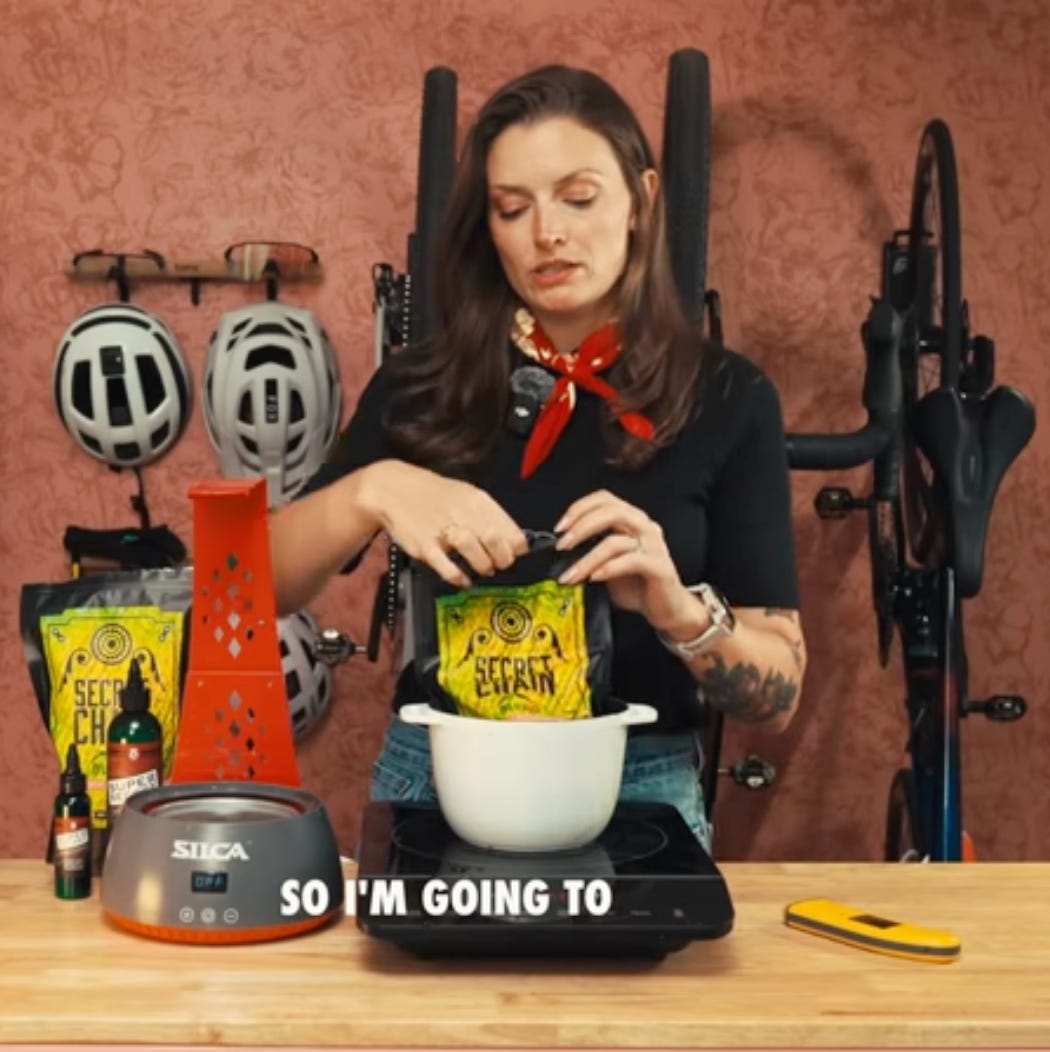
By leaving the chain in longer you succeed only in costing yourself more money, and not just for the investment in an unnecessary thermometer. More of your expensive wax will cling to the chain exterior, soon to flake off. This will also create more mess, namely wax shards all over the place—first in your shop when you break free the links so you can install it on your bike, and then all over the roads or trails the first kilometer of riding.
― Lennard
Subscribers can send brief technical questions to Lennard at: veloqna@comcast.net.
Lennard Zinn has been designing and building custom bicycles for over 45 years; he founded Zinn Cycles in 1982 and co-founded Clydesdale Bicycles in 2017 and Tui Bikes in 2022. His Tech Q&A column on Substack follows his 35-year stint as a technical writer for VeloNews (from 1987 through 2022). He is a former U.S. National Cycling Team member and author of many bicycle books including Zinn and the Art of Mountain Bike Maintenance, Zinn and the Art of Road Bike Maintenance, and The Haywire Heart. He holds a bachelor’s degree in physics from Colorado College.
Follow Lennard Zinn on Substack, Strava, X, Instagram, LinkedIn, or Facebook.
I had wondered about the question of powdering inner tubes for a long time myself. However, you forget to mention the one benefit of the powder -- that is the impressive cloud of powder that occurs when your tube and tire fail simultaneously and explode with a bang like a gunshot. The cloud of powder, combined with the sudden, frightening noise is an excellent way to terrify passers-by and make them think something really serious has just occurred.
I'm having a hard time letting go of the powdering the tubes thing 😉 I've switched to cornstarch baby powder years ago due to the hazards. I haven't really seen it be a problem when wet. Then again, I'm not sure I've done a tube change in a downpour either. Pretty sure that the nominal amounts will just wash off. Might be interesting if it gets wet and then dries inside.
However, the real reason for the note is on wax temperature. I found that removal at the 'right' temperature makes a big difference in the results. When I was 'guessing', I'd often end up with it a bit too cool and a LOT of extra wax coming out with the chain. (Easily consuming double or more wax on parts that don't need it and only flake off as you run it in). When too hot, it SEEMED too runny and I worry not enough was retained but I can't prove this one. But once I switched to a thermostat-controlled melt at recommended temperature, it comes out thoroughly, but not excessively coated every time. So I would argue that temp management is actually important but not necessarily critical.